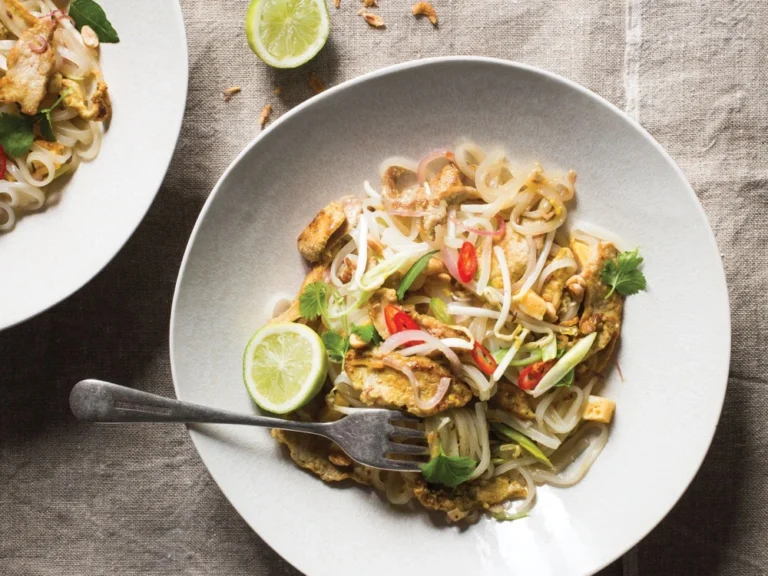
Pad Thai is undoubtedly one of the more popular exports of Thailand, as it perfectly combines the sweet, salty and sour flavours Thai cuisine is known for.
However, there are conflicting accounts about its origins. Some say pad Thai was developed less than a century ago, when Plaek Phibunsongkhram (then-prime minister) encouraged chefs to develop a new national dish.
Other historians believe pad Thai emerged during the war, when people experienced rice shortages. It was said the prime minister encouraged cooks to make new dishes using rice noodles instead of rice.
Whatever its origins, there’s no denying this delicious combination of stir-fried rice noodles, eggs, bean sprouts, and some tangy pad Thai sauce remains to be a global hit.
Pad Thai’s signature chewy al dente rice noodles, assorted stir-fried veggies and meat, combined with the fascinatingly fresh, sweet, and tangy tamarind sauce, make it the perfect bowl of noodles. Good thing pad Thai is relatively easy and quick to make, so you can enjoy it freshly made at home!
What’s more, pad Thai is quite versatile, so ingredient substitutions can be easily done.
If you want a more authentic version of pad Thai, you could use traditional ingredients like dried shrimp, pickled vegetables, and garlic chives.
However, as the name suggests, this pork pad Thai recipe makes use of free-range pork instead of shrimps. But, just like the original, this recipe is easy to prepare, packed with nutrients and rich with fresh, tangy flavours.
So, if you’re a pad Thai fan, you ought to give this homemade version a try!
A Guilt-Free Pork Recipe
This pork recipe version of the famous pad Thai entails a visit to the Church Street Butcher – your local free-range butcher in Melbourne.
By opting for free-range pork and other responsibly, sustainably and locally raised fresh produce, you’re not only reducing your carbon footprint — you’ll also be using the finest fresh ingredients that are free from environmental toxins so common in conventional fresh produce.
Recipe Variations
Just like with most noodle stir-fries, the possibilities are endless if you wish to customise pork pad Thai to your liking. Since it’s homemade, you’re free to:
- Use your favourite protein (beef, pork, shrimp, chicken or tofu).
- Choose a sweetener you like for the pad Thai sauce.
- Control the spiciness level.
- Go vegetarian or vegan.
- Opt to use gluten-free ingredients.
- Include the vegetables, herbs and spices you want.
Ready to make pork pad Thai?
Pad Thai is undoubtedly one of the more popular exports of Thailand, as it perfectly combines the sweet, salty and sour flavours Thai cuisine is known for.
However, there are conflicting accounts about its origins. Some say pad Thai was developed less than a century ago, when Plaek Phibunsongkhram (then-prime minister) encouraged chefs to develop a new national dish.
Other historians believe pad Thai emerged during the war, when people experienced rice shortages. It was said the prime minister encouraged cooks to make new dishes using rice noodles instead of rice.
Whatever its origins, there’s no denying this delicious combination of stir-fried rice noodles, eggs, bean sprouts, and some tangy pad Thai sauce remains to be a global hit.
Pad Thai’s signature chewy al dente rice noodles, assorted stir-fried veggies and meat, combined with the fascinatingly fresh, sweet, and tangy tamarind sauce, make it the perfect bowl of noodles. Good thing pad Thai is relatively easy and quick to make, so you can enjoy it freshly made at home!
What’s more, pad Thai is quite versatile, so ingredient substitutions can be easily done.
If you want a more authentic version of pad Thai, you could use traditional ingredients like dried shrimp, pickled vegetables, and garlic chives.
However, as the name suggests, this pork pad Thai recipe makes use of free-range pork instead of shrimps. But, just like the original, this recipe is easy to prepare, packed with nutrients and rich with fresh, tangy flavours.
So, if you’re a pad Thai fan, you ought to give this homemade version a try!
A Guilt-Free Pork Recipe
This pork recipe version of the famous pad Thai entails a visit to the Church Street Butcher – your local free-range butcher in Melbourne.
By opting for free-range pork and other responsibly, sustainably and locally raised fresh produce, you’re not only reducing your carbon footprint — you’ll also be using the finest fresh ingredients that are free from environmental toxins so common in conventional fresh produce.
Recipe Variations
Just like with most noodle stir-fries, the possibilities are endless if you wish to customise pork pad Thai to your liking. Since it’s homemade, you’re free to:
- Use your favourite protein (beef, pork, shrimp, chicken or tofu).
- Choose a sweetener you like for the pad Thai sauce.
- Control the spiciness level.
- Go vegetarian or vegan.
- Opt to use gluten-free ingredients.
- Include the vegetables, herbs and spices you want.
Ready to make pork pad Thai?
Time to Visit Your Local Free-Range Butcher
If you’re planning to make pork pad Thai, don’t forget to drop by at the Church Street Butcher in Brighton for fresh free-range pork.
Featuring various free-range meats like beef, pork, lamb, chicken and other fresh produce, we strive to offer our customers healthy and wholesome options that are sustainably raised and sourced.
In case you prefer to order online, take advantage of our free delivery service for orders over $150 in Brighton and nearby Bayside suburbs.
Get in touch today!